Spathiphyllum 'Sensation': The biggest peace lily.
A floor-statement cultivar with leaves the size of small umbrellas. Slow but spectacular.
At a glance
- Mature size
- 4–6 ft / 1.2–1.8 m
- Leaf
- Deeply ribbed, up to 20 in long
- Bloom
- Large white spathes, sparingly
- Notable
- Tolerates surprisingly low light
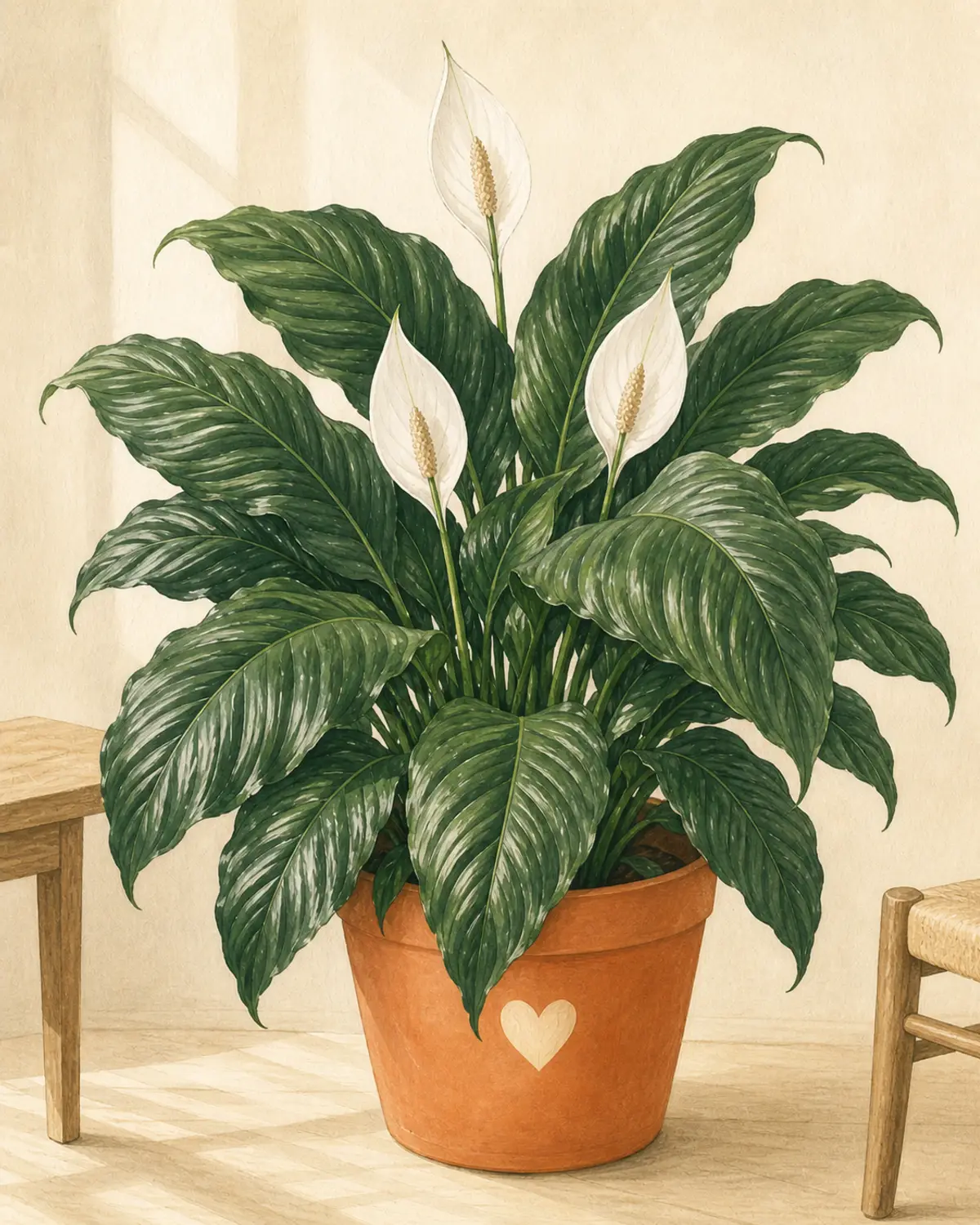
Care notes specific to 'Sensation'
'Sensation' is the largest peace lily ever introduced — a Dutch-bred cultivar that reaches 4–6 feet tall with deeply ribbed leaves up to 20 inches long. It is a floor plant, not a tabletop plant, and it changes the math on light, water, and pot weight compared with smaller cultivars.
- Light: ironically the most low-light-tolerant cultivar despite being the biggest. The deep-ribbed leaves use light efficiently. Bright indirect is still better, but a moderately lit corner that would starve a 'Domino' can work.
- Pot size: a 12-inch pot at minimum at maturity; 14–16 inches for a full-size specimen. Smaller pots tip over once leaves reach length.
- Pot weight: a watered 'Sensation' in a 14-inch pot weighs 30+ pounds. Plan for a sturdy plant caddy or a permanent floor location before buying.
- Watering volume: uses far more water per session than smaller cultivars. Expect to water twice through (first wet, second flush) until water drains evenly.
- Repotting: every 2–3 years, but expect to enlist a second person — the root mass alone can weigh 10+ pounds.
Best fit
'Sensation' is for people who want a floor plant, not a tabletop plant. Give it space beside a bright window, in a wide hallway, or in a large room where the leaves can spread without being brushed all day.
Light and room placement
It tolerates lower light better than many showy houseplants, but it still grows best in bright indirect light. Because the leaves are large, direct sun can leave obvious scorch marks. Keep it back from hot glass and rotate the pot so the plant does not lean.
Pot and watering notes
A mature 'Sensation' needs a heavier, wider pot for stability. Watering can be slower because there is more soil volume. Check the mix before watering rather than assuming a large plant always needs more water.
Buying checklist
- Choose a plant with firm upright leaves and a stable crown.
- Avoid plants with torn leaves if you want a clean statement look.
- Check that the pot is not wobbling or severely root-bound.
- Inspect undersides of large leaves for mites and dust.
Maintenance
Large leaves collect dust, so cleaning matters. Wipe each leaf with a damp cloth and support the leaf from below. Trim only damaged leaves at the base; cutting across a large leaf usually looks worse than leaving minor cosmetic marks.
Blooming expectations
'Sensation' is grown mostly for foliage and may bloom less often than smaller green peace lilies in ordinary homes. Healthy leaves are the main prize. If you want blooms, improve light first and feed lightly during active growth.
Watering rhythm
Large leaves can transpire a lot, but large pots also hold more moisture. Check several inches down before watering. If the top is dry but the lower pot is still damp, wait. A moisture meter or wooden skewer can help with deep pots.
Repotting notes
Repot when the plant is unstable, roots are crowded, or watering becomes difficult. Move only one pot size up. For a large floor plant, stability matters as much as root room, so choose a heavy pot with drainage.
Cleaning and display
Clean one leaf at a time and support it while wiping. Large leaves tear if pulled. Give the plant enough space that people and pets do not brush past it constantly, because mechanical damage is very visible.
Choose 'Sensation' if
Choose it if you want a bold foliage plant and have floor space. Skip it if you need a small desktop plant, move often, or cannot provide a stable pot and room around the leaves.
How to compare it in a shop
Look at the newest leaves, not just the largest old leaf. New leaves should be firm and clean. A few tears are normal on large leaves, but widespread yellowing, soft stems, or sour soil are warning signs.
Long-term shape
'Sensation' becomes architectural with time. Give it a permanent position before it gets heavy. Moving a large specimen often leads to torn leaves, tilted stems, and watering mistakes while it settles.
FAQ
Is 'Sensation' good for small rooms? Usually no; it wants floor space. Does it bloom? It can, but foliage is the main reason to grow it. Why are the leaves tearing? Large leaves tear from handling, traffic, pets, or being squeezed into a tight corner.
'Sensation' compared to other cultivars
If 'Sensation' feels like too much plant, the smaller cultivars need similar basic care at an easier scale:
- 'Mauna Loa' — the mid-size 3 ft cultivar with simple green-leaf care in a more manageable size.
- 'Clevelandii' — the compact 24–30 inch tabletop classic with narrow leaves.
- 'Domino' — the smallest cultivar, variegated and slow-growing for small rooms.
- 'Picasso' — also a statement plant, but variegated and mid-size rather than green and giant.