Peace lily winter care: slow down and keep it warm.
In winter, a peace lily usually needs less water, no routine fertilizer, brighter indirect light, and protection from cold glass, drafts, and heater blasts.
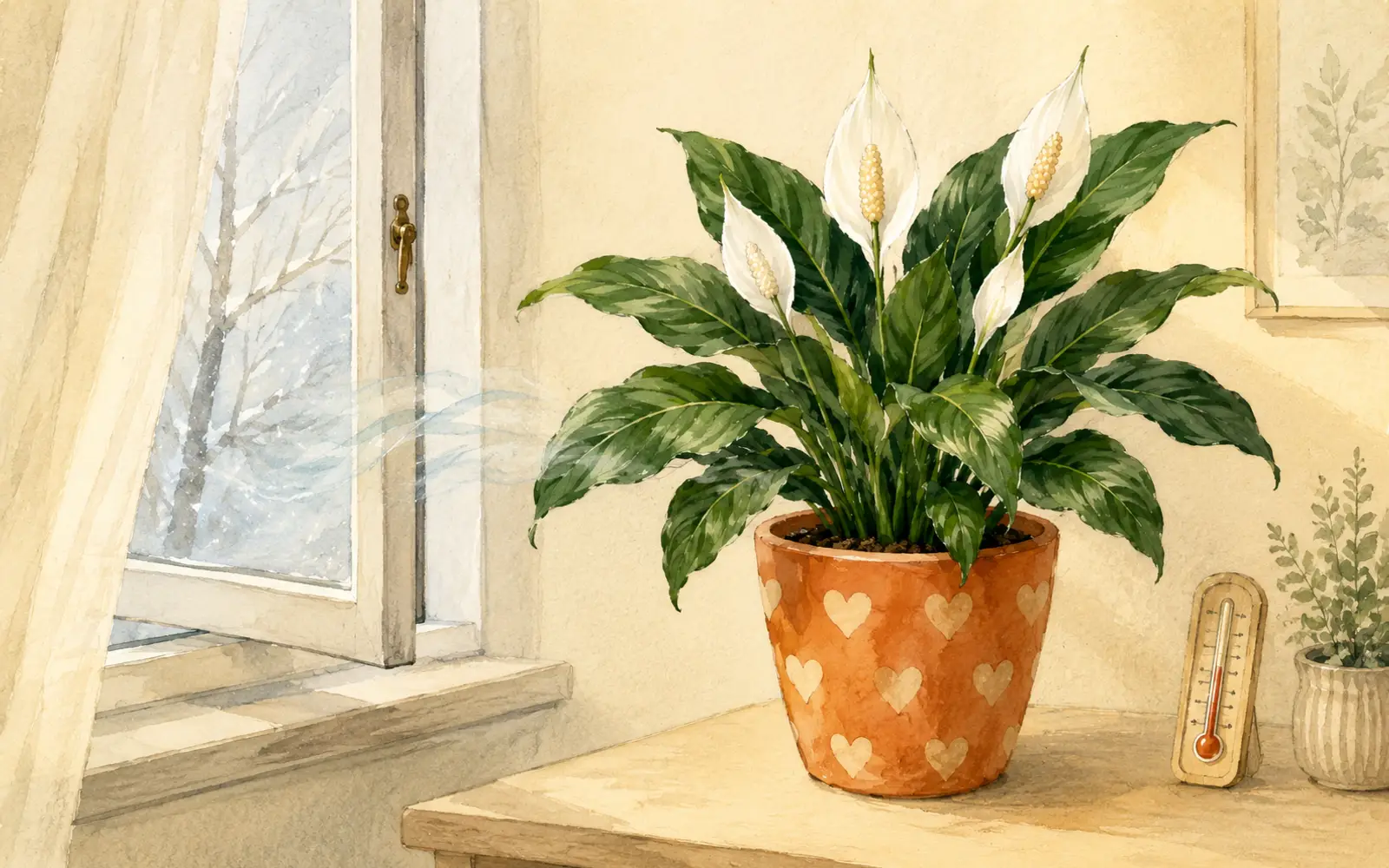
Winter care
- Main winter change
- Growth slows, so the pot dries more slowly and watering should be checked, not scheduled.
- Best temperature
- Keep it in normal warm room conditions and away from cold windows or exterior-door drafts.
- Fertilizer
- Skip routine feeding until active growth returns in spring.
- Big warning sign
- Dark, limp, or blackened leaves after cold exposure mean temperature stress, not thirst.
Why winter is different
A peace lily does not go dormant like a bulb in storage, but indoor winter still changes its rhythm. Days are shorter, light is weaker, rooms may be drier, and cold air can pool near windows. The plant keeps living, but it usually grows more slowly.
That slower growth is the reason winter overwatering is so common. A pot that dried in six or seven days during summer may stay damp for much longer in January. If you keep watering on the old schedule, the roots sit wet while the plant is using less water.
Move it for better winter light
Peace lilies still need bright indirect light in winter. A spot that was bright enough in July may become dim when the sun angle changes or trees and buildings shade the window. If the plant stretches, stops blooming, or stays wet for too long, move it closer to a bright window without pressing it against cold glass.
Direct winter morning light can be gentler than summer sun, but watch the leaves. Pale patches, dry tan marks, or sudden curling mean the light is too harsh. The safest target is close to a bright window with a sheer curtain, or a bright room where the plant can see the sky without sitting in hot sun.
Water by soil, not by calendar
Use the finger test every time. Press into the top inch of soil. If it still feels cool and damp, wait. If the top inch is dry and the pot feels lighter, water thoroughly until excess runs from the drainage holes, then empty the saucer.
A peace lily may droop from thirst, but winter drooping can also come from cold roots or soggy soil. Check the soil before reacting. If it is wet and the plant droops, more water is the wrong fix. Look for a heavy pot, sour smell, yellowing lower leaves, or soft stems near the soil line.
If leaves turn dark, limp, or black after a cold night, do not soak the pot. Move the plant to a warmer stable room, trim collapsed tissue after you can see what is truly dead, and let the soil approach the normal watering point before watering again.
Keep it away from cold glass and drafts
A windowsill can be much colder than the room. Leaves touching glass can chill even when the thermostat says the house is warm. Exterior doors, unheated porches, leaky windows, and cold stairwells are also risky. NC State Extension notes that cold and drafty conditions slow growth, and peace lilies are tropical plants that dislike chilling.
Move the pot a few inches back from the window if nights are cold. If the room has a cold floor, set the pot on a stand, shelf, or insulated surface so the root zone is not sitting on a chilled tile or stone surface.
Watch heater air, too
Winter stress is not only cold. Forced-air vents, radiators, fireplaces, and space heaters can dry leaf tips and warm one side of the plant too aggressively. A peace lily near a heat source may droop even when the soil is damp because the leaves are losing water faster than the roots can keep up.
Move the plant out of the direct air stream. If the room is very dry, a small humidifier is more useful than misting. Misting makes leaves wet briefly, but it does not change the room's humidity for long.
Do not push fertilizer in winter
Winter is not the time to force growth. If the plant is not actively producing new leaves, fertilizer can leave salts in the soil and contribute to brown tips. Resume light feeding in spring when you see steady new growth, and use a diluted dose rather than a full-strength push.
If you brought it indoors from a patio
Quarantine it from other houseplants for a week or two. Outdoor plants can carry fungus gnats, mites, mealybugs, or eggs you do not see on day one. Wipe the leaves, inspect undersides, and check the soil surface before placing it near the rest of your indoor collection.
Expect a short adjustment period. Lower indoor light can slow growth, and a few older leaves may yellow after the move. That is different from rapid collapse, black tissue, or a spreading pest problem.
Winter troubleshooting
- Yellow lower leaves: often wet soil, low light, aging leaves, or a mix of all three.
- Brown tips: dry air, fertilizer salts, mineral buildup, or repeated stress.
- No flowers: normal in low winter light; focus on healthy leaves first.
- Drooping with wet soil: check for cold roots, root rot, or poor drainage.
Sources & further reading
- NC State Extension Gardener Plant Toolbox — Spathiphyllum temperature and care notes.
- UF/IFAS Gardening Solutions — Peace Lily indoor care overview.
- University of Vermont Extension — moving houseplants indoors before winter.