Peace lily pest cleanup: isolate, repeat, verify.
One wipe is not a pest plan. Move the plant away, clean leaves, treat the right pest, inspect nearby plants, and keep watching for new signs.
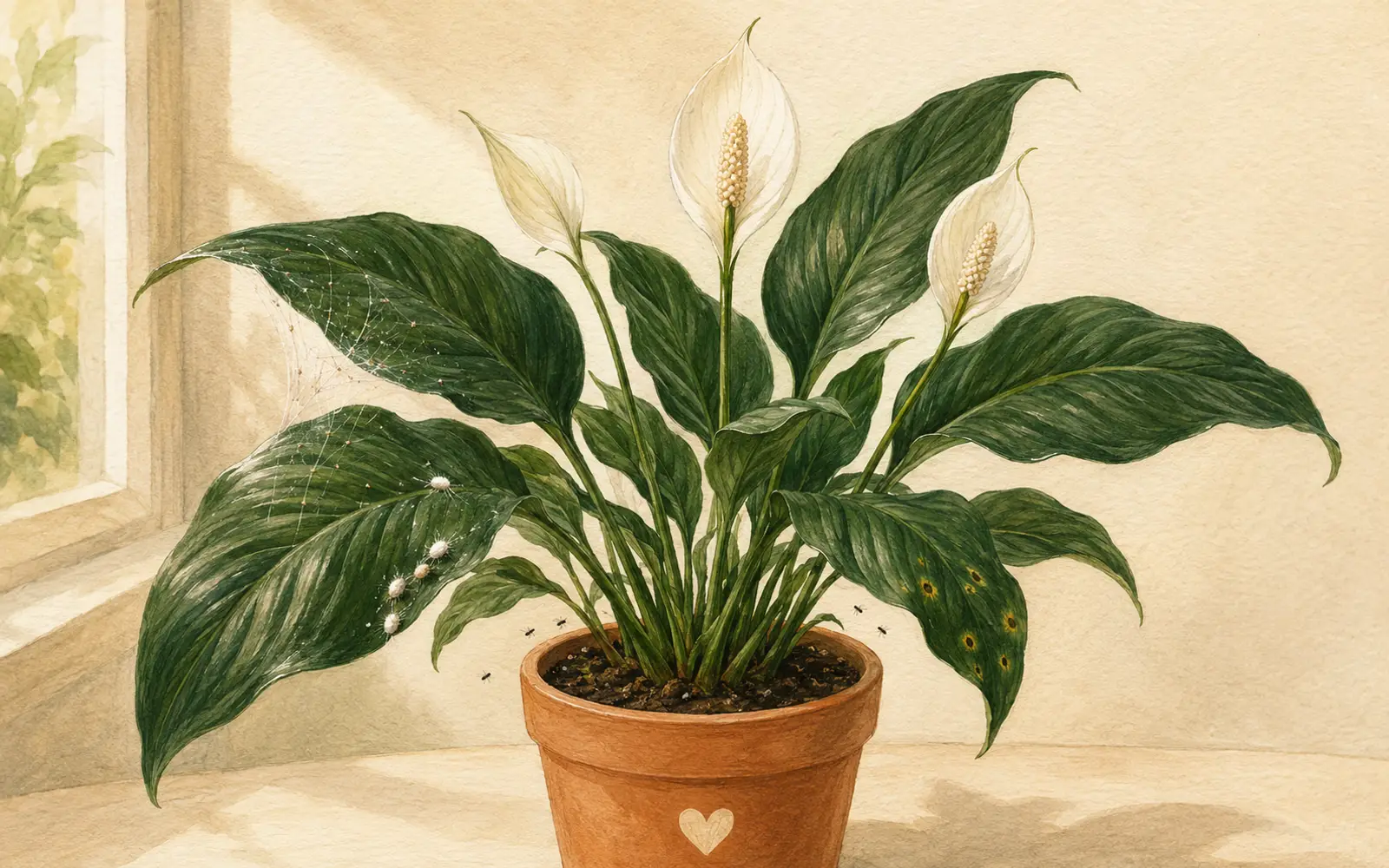
Cleanup plan
- First move
- Isolate the plant from other houseplants as soon as pests are suspected.
- Clean where
- Leaf undersides, leaf joints, crown area, pot rim, saucer, and nearby surfaces.
- Repeat
- Most pests need follow-up checks and treatments, not one cleaning.
- Safe return
- Wait until you see no new signs through repeated inspections.
Why isolation matters
Peace lily pests rarely stay politely on one leaf. Mealybugs hide in leaf bases, spider mites spread in warm dry rooms, and fungus gnats move between wet pots. If you wait until identification is perfect, nearby plants may already be exposed.
Isolation does not need to be dramatic. Move the plant to a bright bathroom, separate table, spare room, or other location away from your main plant group. Keep it in usable light so the plant can recover while you work.
The first 30 minutes
- Move the plant. Keep it away from other houseplants.
- Identify the pattern. Look for cottony tufts, webbing, sticky residue, flying gnats, or leaf spots.
- Remove the worst tissue. Prune leaves that are dead, heavily infested, or diseased.
- Wipe leaves. Clean tops and undersides with a damp cloth.
- Clean the area. Wipe the shelf, saucer, pot rim, and tools.
Brown tips, root rot, and low humidity are not fixed by pest spray. Match the sign before treating so you do not stress the plant for the wrong reason.
If it is mealybugs
Mealybugs look like small white cottony clusters, often tucked into leaf joints and along stems. Remove visible bugs with a cotton swab or cloth, then repeat inspections every few days. Mealybugs are easy to miss because they hide in tight plant parts.
Check nearby plants carefully. If one peace lily has mealybugs, any plant that touched it or sat close to it deserves inspection.
If it is spider mites
Spider mites often show as fine webbing, pale stippling, dusty-looking leaves, or decline in hot dry conditions. Wiping leaves helps remove some mites and dust, but repeat treatment and humidity correction matter. Focus on undersides of leaves.
Keep the plant out of harsh sun while leaves dry after cleaning or treatment. Stressed leaves can mark more easily.
If it is fungus gnats
Fungus gnats are usually a soil-moisture problem. Adult flies are annoying, but the fix is in the pot: let the top layer dry more appropriately, improve drainage, remove constantly wet debris, and consider replacing soggy mix if the soil is degraded.
Do not keep watering because the plant looks sad without checking the soil. Wet soil is often the reason gnats are there.
If it is leaf spot
Leaf spot cleanup is about reducing spread and improving conditions. Remove badly spotted leaves, avoid splashing water across foliage, improve gentle airflow, and keep leaves from staying wet. Clean tools after cutting suspicious tissue.
Do not confuse old mechanical damage with active disease. Active spots often expand, multiply, or develop yellow halos.
Clean the pot and surroundings
Pests and residue can sit on the saucer, cachepot, shelf, and nearby window ledge. Wash the saucer, wipe the pot exterior, and clean the surface where the plant sat. If leaves touched a curtain or another plant, inspect those too.
If you prune pest-covered leaves, put them in the trash. Do not leave them on the potting bench or toss them near other indoor plants.
How long to quarantine
Keep the peace lily separate until repeated inspections show no new pests or disease signs. For many indoor pests, that means at least a couple of weeks, because eggs or hidden individuals may appear after the first cleaning. If you keep finding new signs, restart the clock.
When to repot during cleanup
Repot only when the problem is in the soil or roots: fungus gnat larvae in degraded wet mix, sour soil, root rot, or a pot that will not drain. Repotting during a leaf pest outbreak can add stress if the roots are otherwise fine.
Prevent the next outbreak
- Inspect new plants before they join the collection.
- Quarantine plants that spent summer outdoors.
- Clean peace lily leaves every few weeks.
- Stop letting pots sit in runoff.
- Check undersides, not just the pretty top surface.
Sources & further reading
- NC State Extension Gardener Plant Toolbox — Spathiphyllum mealybug and care notes.
- UF/IFAS Gardening Solutions — Peace Lily leaf cleaning and indoor care guidance.
- University extension houseplant guidance on isolating plants brought indoors before winter.