Best water for a peace lily: what actually matters.
Most peace lilies tolerate ordinary tap water, but repeated mineral or salt buildup can contribute to brown tips, white crust, and stressed roots.
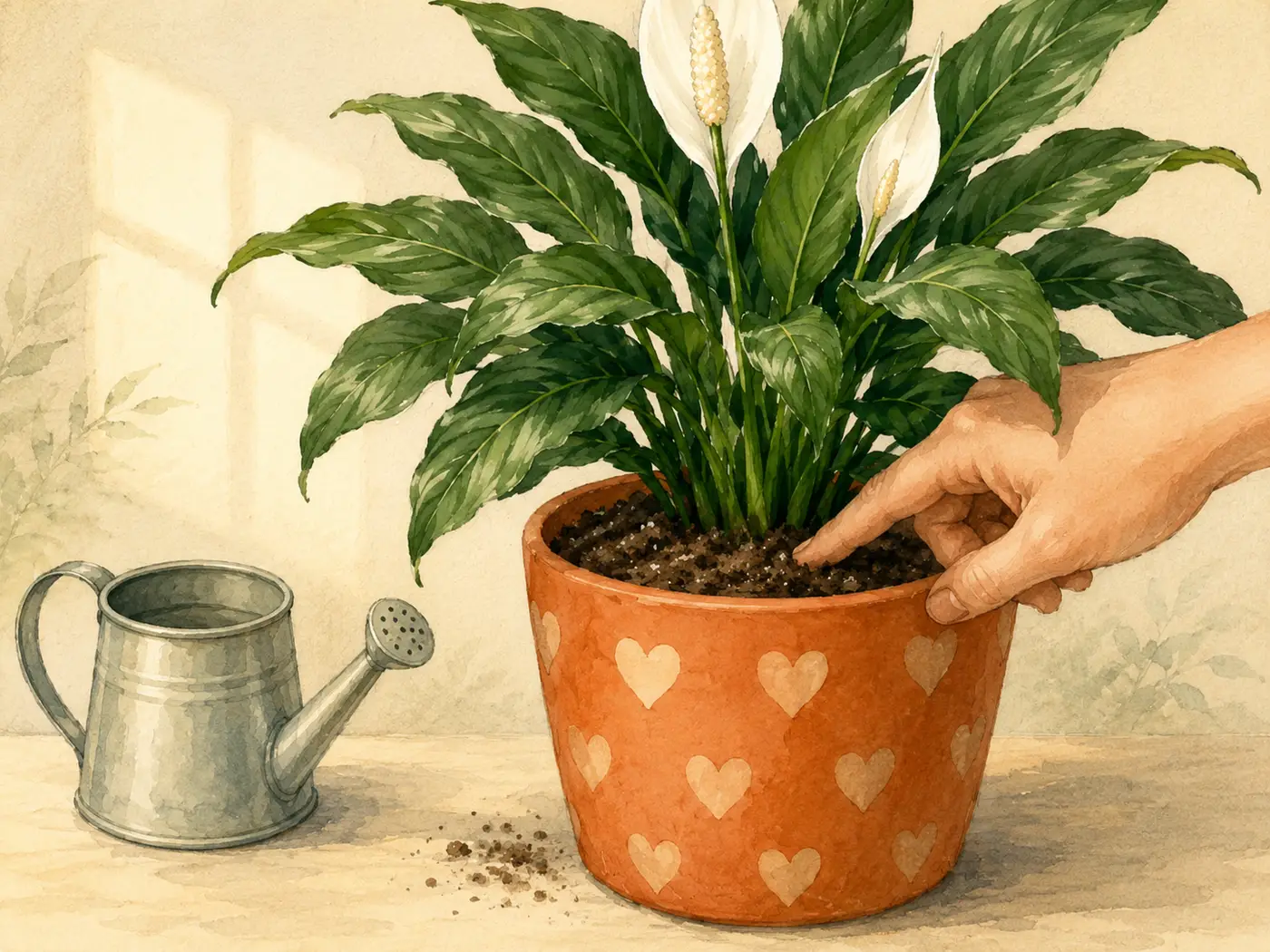
Water quality
- Best everyday choice
- Room-temperature water that does not leave heavy mineral crust in the pot.
- Sensitive plants
- Try filtered, rain, distilled, or reverse-osmosis water if brown tips keep appearing.
- Avoid
- Softened water from a salt-based softener.
- Do not forget
- Water quality cannot fix soggy soil, poor drainage, or low humidity by itself.
Start with watering technique first
Water quality matters, but it is not the first thing to blame. A peace lily with yellow leaves, wet soil, and a heavy pot is more likely overwatered than harmed by tap water. A plant that wilts in dry soil needs a better watering rhythm before it needs special water.
Once the basics are right, water quality becomes useful to check. If the plant is otherwise healthy but keeps making crisp brown tips, or if the soil surface develops white mineral crust, dissolved minerals and fertilizer salts may be part of the problem.
Tap water: usually usable, sometimes irritating
Many peace lilies grow for years with tap water. The issue is that tap water is not the same everywhere. Hard water, disinfectants, fluoride, and dissolved salts vary by city, well, and home plumbing. Over time, dissolved minerals can collect in potting mix as water evaporates.
Peace lily brown tips can come from several causes at once: low humidity, inconsistent watering, too much fertilizer, excess salts, old leaves, or root stress. Water quality is one piece of the puzzle, not a magic diagnosis.
Leaving tap water out may reduce some chlorine if your water utility uses free chlorine, but it will not reliably remove minerals, salts, or fluoride. If the plant is reacting to dissolved solids, sitting water overnight is not the full solution.
What about chlorine and chloramine?
Municipal water is treated so it is safe to drink. Some plant owners prefer to let water stand before using it, but modern water systems may use chloramine, which is more stable than chlorine. If your plant is healthy, you do not need to overcomplicate this. If it is sensitive, use a filtered source and watch new growth, not old damaged tips.
Fluoride and brown tips
Peace lilies are often grouped with fluoride-sensitive houseplants in practical care advice. Fluoride or mineral sensitivity usually shows as repeated tip burn on otherwise healthy leaves, especially when watering, light, and humidity are reasonable. The old brown tissue will not turn green again, so judge progress by whether new leaves develop fewer brown tips.
If you suspect fluoride or mineral buildup, try rainwater, distilled water, or reverse-osmosis water for several watering cycles. A basic carbon pitcher may improve taste and reduce some compounds, but it may not remove everything that contributes to plant tip burn.
Avoid softened water
Water from a salt-based softener can be a poor choice for houseplants because sodium can accumulate in potting mix. If your home has a softener, use an unsoftened tap, filtered source, rainwater, distilled water, or reverse-osmosis water for the peace lily.
Flush the pot when salts build up
White crust on the soil, crust around drainage holes, or a long history of fertilizing can mean salts have built up. Flush the pot by slowly running room-temperature water through the soil and letting it drain freely. Do this only in a pot with drainage, and do not let the plant sit in the runoff.
Flushing is not the same as overwatering. It is an occasional reset for a draining pot. Afterward, let the soil return to the normal watering point before watering again.
Best water choices
- Rainwater: useful if collected cleanly and stored safely.
- Distilled water: reliable for sensitive plants, but not always convenient.
- Reverse-osmosis water: low in dissolved minerals; useful for repeated tip burn.
- Filtered tap: often better tasting and sometimes helpful, depending on the filter.
- Regular tap: acceptable for many plants if it does not cause buildup or repeated tip burn.
Do not chase perfect water while roots are drowning
If soil is compacted, the pot has no drainage, or the plant is sitting in a cachepot full of runoff, changing water type will not save it. Fix drainage and watering first. A peace lily needs evenly moist, oxygenated soil, not a constantly saturated root ball.
How long until you know it helped?
Existing brown tips stay brown. Look at new leaves over the next month or two. If new leaves emerge cleaner and older damage stops spreading, water quality or salt buildup may have been part of the issue. If new damage continues, check humidity, light, fertilizer, root health, and watering rhythm.
Sources & further reading
- NC State Extension Gardener Plant Toolbox — Spathiphyllum fertilizer and soil flushing guidance.
- UF/IFAS Gardening Solutions — Peace Lily indoor watering guidance.
- Extension and horticultural guidance on mineral buildup, flushing, and fluoride-sensitive houseplants.