About us
We are Anastasia and Marina Remeslo, two sisters who grew up loving houseplants and built Peace Lily Care to help people understand one of the most common indoor plants.
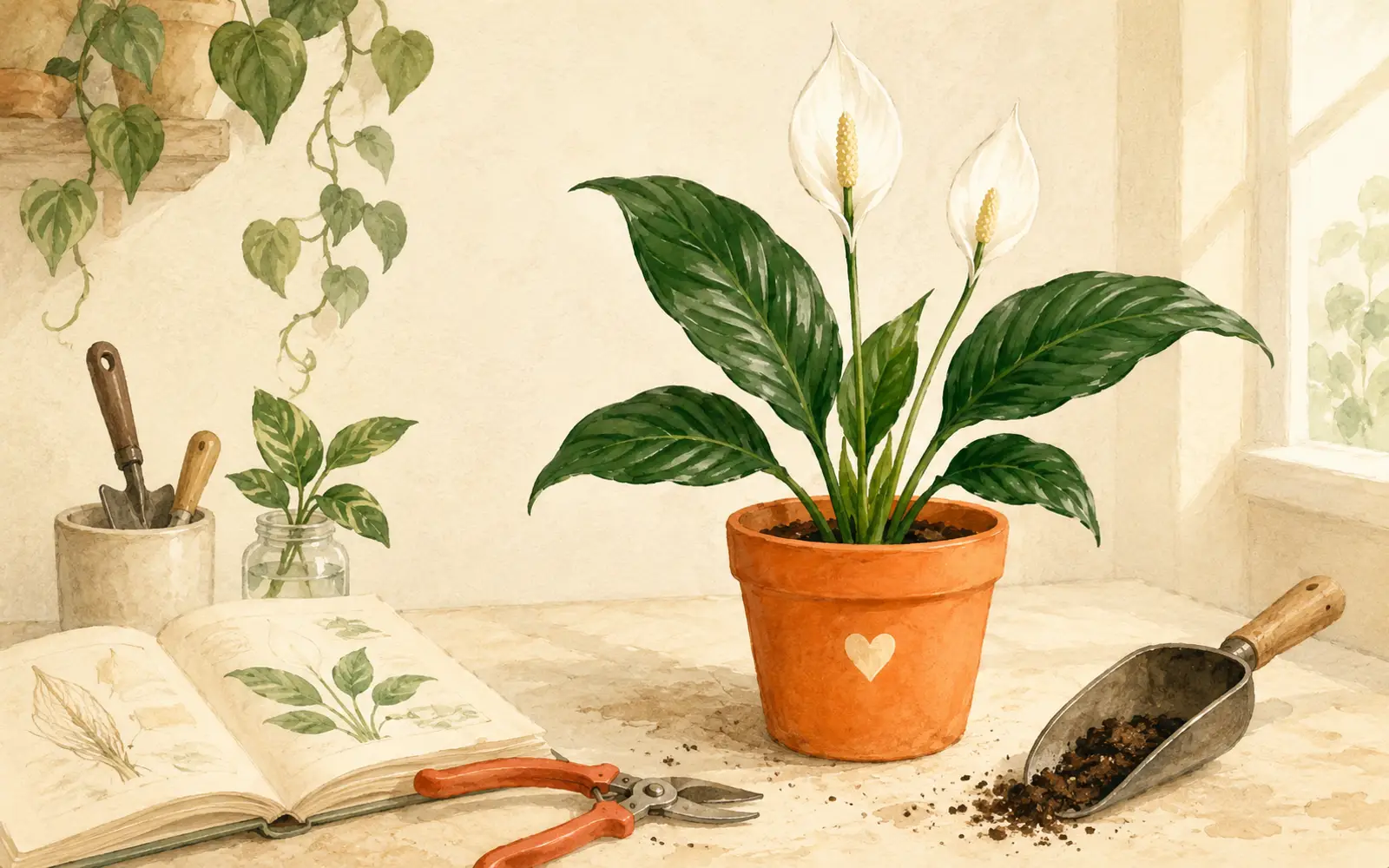
Who we are
Welcome to Peace Lily Care. We are two sisters with a shared love for indoor plants, quiet growing routines, and the small satisfaction of seeing a struggling plant recover.
We are not professional botanists. What we bring is years of hands-on houseplant care, a habit of reading plant sources carefully, and plenty of experience with the ordinary mistakes most plant owners make: watering too soon, moving a plant too often, ignoring light, choosing the wrong pot, or panicking when a leaf turns yellow.
Our plant story
Our love for plants started at home. We were always drawn to the way a room changes when something green is growing in it. Over time, our windowsills and shelves filled with houseplants, and each one taught us something different about patience, observation, and recovery.
Peace lilies became one of the plants we returned to again and again because they are familiar, beautiful, and surprisingly misunderstood. They are sold as easy plants, but they still confuse people: they droop dramatically, yellow suddenly, stop blooming, grow brown tips, or look fine one week and tired the next.
That mix of forgiving and confusing is exactly why we wanted to build a site focused on them.
Why this site exists
Peace Lily Care is our way of sharing what we have learned from caring for real plants, comparing notes, reading horticultural and botanical sources, and turning all of that into plain-language guides.
Instead of covering every houseplant at once, this site goes deep on one plant: Spathiphyllum. That lets us answer the questions people actually search for when their peace lily is drooping, yellowing, not blooming, outgrowing its pot, or sitting in a home with pets.
For broader houseplant guides, collections, tools, and beginner paths, Houseplant 101 is a useful next stop. Peace Lily Care stays focused on detailed Spathiphyllum guidance.
From Anastasia
Anastasia: I like the practical side of plant care: checking the soil, watching a new leaf unfurl, moving a pot a little closer to the window and seeing the plant respond. I do not like advice that makes plant care feel mysterious or expensive. Most of the time, a peace lily needs patience, better light, careful watering, and someone willing to look closely before doing too much.
From Marina
Marina: I like the detective work: why a leaf changed, why a bloom turned green, why one plant handles a room better than another. I love plant names, old labels, quiet research, and the small details that explain the bigger pattern. I do not like scary plant advice that skips context, especially around pets and safety.
Our mission
Our goal is simple: help you feel less lost when your peace lily changes. A good guide should tell you what to check, what to avoid, and what recovery may look like. It should make the next step calmer and clearer.
Whether you are caring for your first peace lily or trying to save one you have had for years, we hope this site gives you a useful place to start.
What you will find here
You will find guides on watering, light, soil, humidity, repotting, propagation, blooming, varieties, pests, common leaf problems, outdoor limits, and pet safety. Some pages are quick practical checks. Others go deeper into the plant's background and behavior.
For pet-safety questions, we are especially careful. Plant guides can help you understand risk, but serious symptoms, uncertain plant identification, or possible ingestion should be handled by a veterinarian, poison-control professional, or other qualified expert.
Warmly,
Anastasia and Marina