Are peace lilies toxic to cats?
Yes — but rarely seriously. Here's the realistic risk profile.
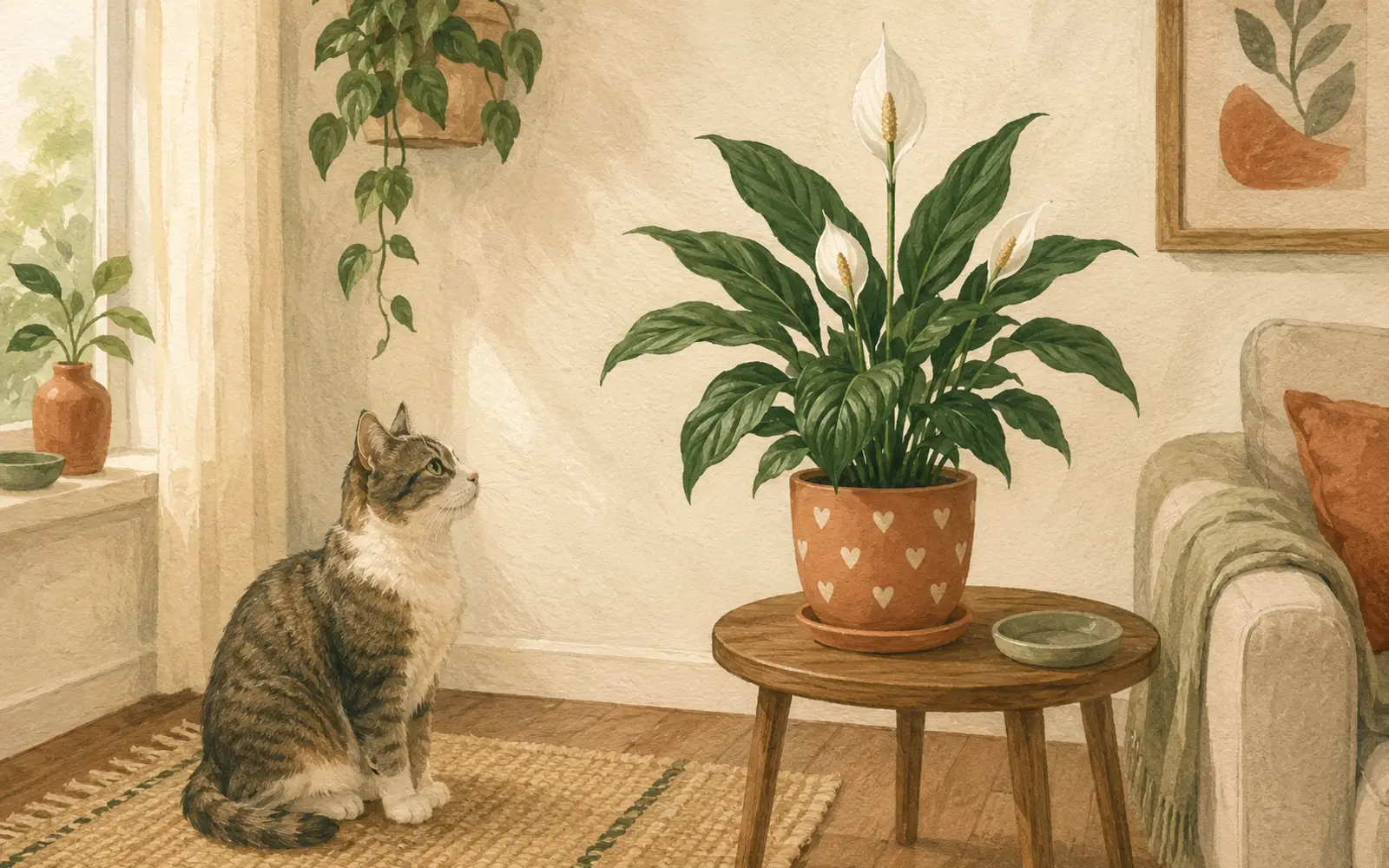
At a glance
- Toxicity to cats
- Mild — irritation, not organ damage
- Mechanism
- Calcium oxalate crystals
- Most common cat behavior
- Single curious bite, then aversion
- Average ER rate
- Low — most cases resolve at home in 2–6 hours
- Critical distinction
- Peace lily is NOT a true lily (Lilium / Hemerocallis)
The most important thing to know about cats
Peace lilies are not in the same risk category as true lilies for cats. True lilies (Lilium and Hemerocallis — Easter, tiger, daylily, Asiatic, Oriental) cause acute kidney failure in cats and are a veterinary emergency from a single petal or pollen exposure. Peace lilies (Spathiphyllum) cause mouth and throat irritation from calcium oxalate crystals and almost never threaten organ function.
This is not a small distinction. Pet poison hotlines triage these calls completely differently. If you only remember one thing from this page: confirm which plant it was before you panic. Side-by-side identification guide.
Why cats are different from dogs with this plant
Three behaviors specific to cats change the risk profile:
- Cats groom. Sap from a chewed or broken leaf transfers to fur and gets licked off later. Wipe a cat that brushed against a damaged leaf before the next grooming session.
- Cats climb. Shelves and plant stands you consider out of reach are not. Cats use furniture, curtain rods, and refrigerator tops as ladders. Assume any horizontal surface the cat can see is reachable.
- Cats are obligate carnivores who occasionally crave plant fibre. The instinct that drives grass chewing also drives leaf chewing, especially in indoor cats with no grass access.
How likely is your cat to chew it?
The good news: the calcium oxalate crystals cause near-instant mouth pain on the first bite, and most cats learn fast. The bad news: kittens, bored cats, and cats new to your home are the ones most likely to test it, and they have the least learned aversion.
Watch the plant for a week after introducing it. Light tooth marks on a leaf edge usually mean a cat tested it once and stopped. Multiple chewed leaves over time mean you have a determined chewer and need to remove the plant, not move it higher.
If your cat chewed the plant
Most home incidents resolve in 2–6 hours with mouth irritation, drooling, and possibly one vomit episode. For the symptom-by-symptom timeline and full first-aid steps, see the symptoms and first aid guide. The short version: remove plant material from the mouth, offer water, watch closely for two hours, and call your vet for swelling, breathing trouble, or symptoms beyond four hours.
Have ASPCA Animal Poison Control (888-426-4435) or Pet Poison Helpline (855-764-7661) saved in your phone. Both charge a fee but give cat-specific triage advice.
Cat-proof placement that actually works
"High shelf" is not a strategy for most cats. Effective placement uses a barrier the cat cannot bypass:
- Closed-door room — bathroom, study, or guest room the cat does not enter.
- Hanging planter from a ceiling hook with no nearby furniture launch pad.
- Glass terrarium or display case for small specimens.
- Replace it with a cat-safe alternative (Boston fern, parlor palm, calathea, spider plant) in accessible rooms.
Bitter sprays, citrus peels, and motion deterrents work for some cats and not others. Do not bet a vet bill on them.
Fallen leaves are the hidden risk
A peace lily out of reach can still drop a leaf or shed a flower spathe. Cats find these on the floor before you do. After every pruning session or whenever a yellow leaf falls, sweep the area thoroughly before letting the cat back in. The same is true for snipped pieces left on a potting bench.
Multi-cat households
If you have several cats, only one needs to be the chewer. The others may not bother the plant for years and then a new cat in the home changes the dynamic. Place the plant for the most curious cat you have ever owned, not the average one.
Sources & further reading
- ASPCA Animal Poison Control Center — Spathiphyllum spp., accessed May 2026.
- Pet Poison Helpline — Calcium oxalate plants.
- Wismer, T. — Common houseplant toxicities in companion animals, JVECCS, 2019.