How to prune a peace lily without butchering it.
Cut dead leaves and spent flower stalks at the base, trim brown tips only for appearance, and leave partly green leaves unless they are badly damaged.
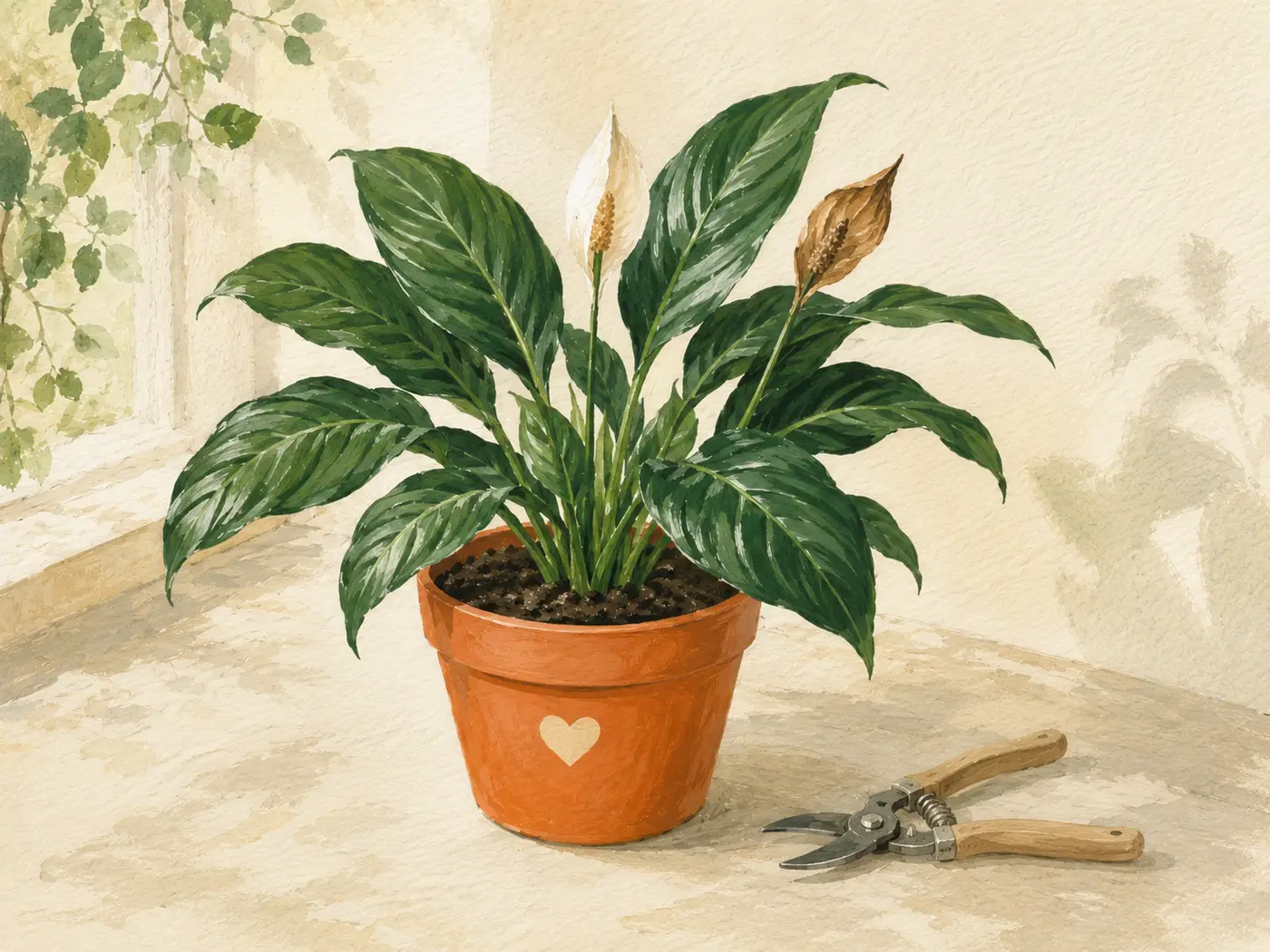
Pruning answer
- Best cut
- Remove yellow leaves and spent flower stalks as low as you can reach.
- Tools
- Clean sharp scissors or pruners.
- Brown tips
- Optional cosmetic trim; it does not fix the cause.
- Do not remove
- Healthy green leaves just because the plant looks crowded.
Peace lilies do not need shaping like shrubs
A peace lily grows from a crown, sending leaves and flower stalks up from the base. It does not branch like a woody plant, so pruning is mostly cleanup: dead leaves, damaged leaves, yellowing leaves, and spent blooms.
The goal is not to force a tidy ball shape. The goal is to remove tissue that is already dying or no longer useful, while keeping enough green leaf area for the plant to feed itself.
Where to cut yellow leaves
Follow the yellow leaf stem down toward the crown and cut it as low as you can safely reach. Do not yank it. Pulling can tear crown tissue or disturb nearby healthy stems. If a lower leaf is fully yellow, it is not coming back, and removing it helps the plant look cleaner.
If only one old lower leaf yellows, that can be normal aging. If many leaves yellow at once, pruning is not the solution. Check watering, drainage, light, and root health.
How to deadhead peace lily flowers
When a white spathe turns green, brown, papery, or limp, the bloom is finishing. Cut the entire flower stalk near the base instead of snipping off only the colored part. Leaving a bare stalk does not help the plant and usually looks awkward.
Deadheading does not instantly trigger a new flower, but it redirects energy away from a fading structure. For future blooms, the bigger factors are bright indirect light, warm conditions, overall health, and patience.
Wipe scissors or pruners before cutting, especially if you are removing diseased leaves or working on several plants. Clean tools reduce the chance of spreading pest residue or disease.
Should you trim brown tips?
You can trim brown tips for appearance, but it is cosmetic. Use clean scissors and follow the natural leaf shape, leaving a narrow edge of brown tissue instead of cutting into fresh green leaf. Cutting into green tissue creates a new wound that may brown again.
After trimming, fix the cause. Brown tips often point to dry air, inconsistent watering, mineral buildup, fertilizer salts, direct sun, or root stress. If you only keep trimming, the plant will keep making new brown edges.
When to remove damaged leaves
Remove a leaf if it is mostly yellow, mostly brown, blackened from cold, mushy, torn badly, or covered in pest damage. Keep a partly green leaf if it still looks functional and the plant does not have many leaves. Green tissue still photosynthesizes, even if the leaf is imperfect.
After root rot, repotting, or division, be conservative. The plant needs leaves to recover. Remove the worst tissue, then wait for new growth before doing a bigger cleanup.
Do not cut all leaves back to the soil
A peace lily can sometimes regrow from a healthy crown, but cutting everything down is a rescue move, not normal care. If all leaves are damaged, first find the cause: cold exposure, root rot, sun scorch, severe drought, or pest damage. Blind pruning can leave the plant with less energy at the exact moment it needs recovery.
Pruning after pests or disease
For mealybugs, spider mites, or leaf spot, remove the worst leaves if they are heavily damaged or hard to clean. Do not strip the whole plant unless the infestation is severe. Isolation, repeated cleaning, and follow-up checks matter more than one dramatic pruning session.
Discard diseased or pest-covered leaves in the trash. Do not compost questionable indoor plant material if it may spread pests back into your home or potting supplies.
Aftercare
After pruning, put the plant back in stable bright indirect light. Do not fertilize immediately just because you cut leaves; wait until the plant is actively growing and otherwise healthy. Water only when the soil reaches the normal watering point.
Sources & further reading
- UF/IFAS Gardening Solutions — Peace Lily care and division notes.
- NC State Extension Gardener Plant Toolbox — Spathiphyllum care, pest, and maintenance notes.